 Fish
FishPsychrolutes species
Blobfish
Its soft deep-sea body can lose its shape after capture and rapid decompression.
Read Blobfish profile
A field guide to unconventional wildlife
Discover why some animals look unusual, what their most surprising features do and how those features make sense in the places they live.
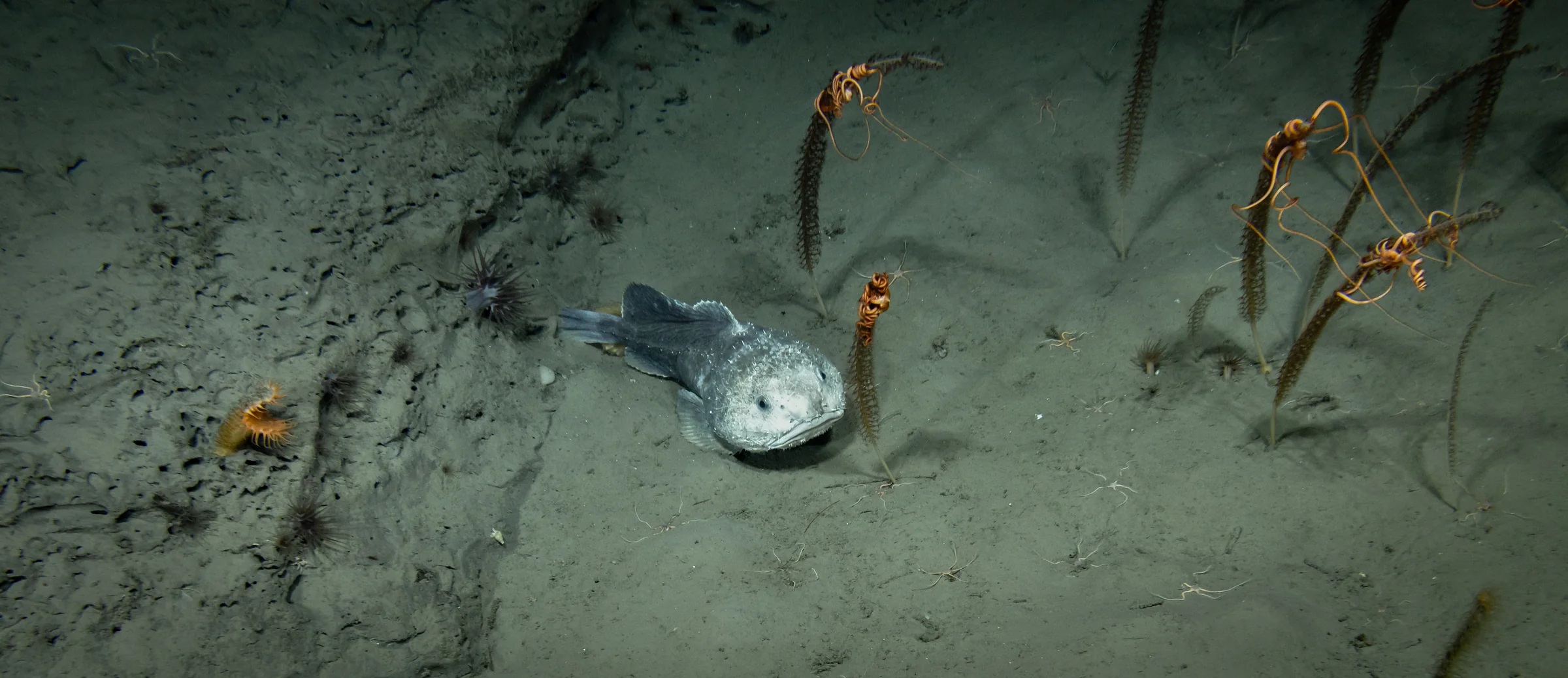
Blobfish underwater
The fish keeps a recognisable shape in its deep-water home. The famous drooping face appears after a specimen reaches the surface.
Quick answer
Ugly animals are species that people judge as unattractive because their features look unfamiliar, exaggerated or human-like. They are not a scientific group. A bare head, folded skin, unusual nose or oversized mouth can help an animal feed, sense its surroundings, communicate or survive in a demanding habitat.
The popular label is an invitation to look again. It separates observation from insult and connects every remarkable appearance to the animal that lives with it.
Featured animals
Start with a few remarkable fish, mammals, amphibians, reptiles and birds. Each example connects the feature people notice first to the job it may perform.
Browse the complete list of 24 animalsFishPsychrolutes species
Its soft deep-sea body can lose its shape after capture and rapid decompression.
Read Blobfish profile Mammal
Daubentonia madagascariensis
Large ears, growing incisors and a thin middle finger help it find food inside wood.
Read Aye-aye profile Fish
FishMitsukurina owstoni
A long snout senses prey, while rapidly extending jaws bring that prey into the mouth.
Read Goblin shark profile Mammal
Heterocephalus glaber
Sparse hair, loose skin and front teeth that close outside the lips suit life in tunnels.
Read Naked mole-rat profile Amphibian
Ambystoma mexicanum
It normally keeps its larval form as an adult, including its feathery external gills.
Read Axolotl profile Mammal
Saiga tatarica
Its enlarged nose helps condition cold air and filter dust across the open steppe.
Read Saiga antelope profile Reptile
Chelus fimbriata and Chelus orinocensis
Fringed skin and a rough shell break up its outline among leaves on the riverbed.
Read Mata mata turtle profile Bird
BirdGymnogyps californianus
A bare head is easier to keep clean when the bird feeds inside large carcasses.
Read California condor profileAppearance and function
Evolution does not design animals for human approval. It preserves traits that help bodies work well enough to survive and reproduce in a particular environment.
| What people notice | What the feature can do | Animals with this feature |
|---|---|---|
| Soft or folded tissue | Support life under pressure or increase surface area for gas exchange. | Blobfish, Titicaca water frog |
| Large noses and unusual faces | Filter air, detect food, communicate or amplify sound. | Saiga, proboscis monkey, star-nosed mole |
| Bare heads, colour and calls | Improve hygiene, carry social signals or help communication travel. | California condor, bald uakari, hammer-headed bat |
| Mouths, jaws, teeth and lures | Capture scarce prey, open protected food or feed without chasing. | Anglerfish, goblin shark, monkfish |
Habitats shape bodies
Soft bodies, broad mouths and sensory lures save energy where pressure is high and food is scarce.
Open habitat guideCompact bodies, digging limbs, exposed incisors and touch-sensitive faces suit narrow, dark tunnels.
Open habitat guideCamouflage, skin folds and flattened heads help animals breathe, hide and strike in water.
Open habitat guideLarge noses, tusks, claws and efficient wings help with climate, feeding and long-distance movement.
Open habitat guide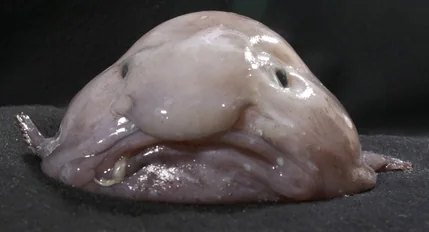
The animal behind the label
The blobfish became an icon of animal ugliness because a damaged deep-sea specimen looked uncannily human at the surface. In its own habitat, it keeps a fish-like form. Few animals show more clearly how context can change the way we judge a body.
Read the complete blobfish guideConservation without a beauty contest
Research on public conservation support has found that charismatic species are more likely to be chosen for animal adoption donations, even when other species face greater danger. Unfamiliar animals can begin with an attention disadvantage.
That does not make every animal on this page endangered. It means conservation claims must be checked species by species, and that a memorable face should open a conversation rather than decide which life matters.
Read the conservation studyCommon questions
There is no scientific answer because ugliness is subjective. The blobfish received the unofficial title after winning a 2013 public poll run by the Ugly Animal Preservation Society. That vote measured public reaction to one famous photograph, not a biological quality.
No. Ugly animals do not form a taxonomic or biological group. The phrase brings together unrelated species whose faces, skin, proportions or movements look unusual to people.
People often react to unfamiliar proportions, bare or folded skin, exposed teeth and features that resemble an exaggerated human face. For the animal, those same traits may support feeding, sensing, camouflage, communication or life in an extreme habitat.
No. Conservation status varies by species, and some have not been fully assessed. Appearance does not reveal extinction risk. Each animal must be checked against a current species-level assessment.
Evidence and further reading
We prefer museum collections, species databases, conservation assessments and published research. Individual animal profiles provide the sources behind their specific claims.